What to take into your next post
- A draft is not permission to publish.
- Use a durable publishing record to handle retries and avoid duplicates.
- Measure whether the posts serve your audience, not just whether automation runs.
Define what the agent is being asked to do
“Handle my X account” bundles several different jobs: finding material, writing drafts, scheduling, publishing, reading replies, and evaluating results. Define the actual scope. An assistant that prepares three drafts needs different access from a system that publishes approved content at a specified time.
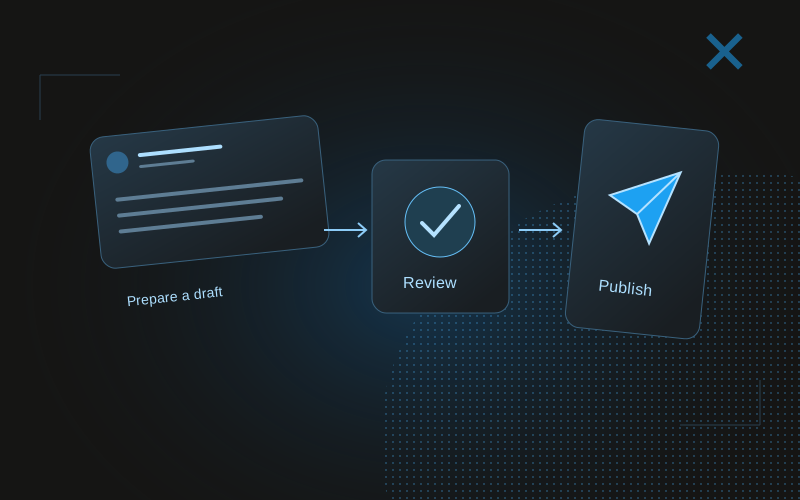
Start with one useful path: select source material, prepare options, approve one, publish it, and review the response. Once that path is reliable, you can decide which repeated step deserves automation. This makes failures easier to diagnose. A poor draft is a content problem; a duplicate post is a publishing problem; a misleading report is an evidence problem.
Write down the owner of each decision. You might let the assistant propose angles but retain topic selection and final wording. You might authorize a scheduler to publish exact approved text while prohibiting it from rewriting the post. The point is a clear contract between intent and execution.
Use real source material instead of an endless idea generator
Give the agent something worth explaining: a product change, an original article, a useful example, a verified observation, or a decision from your work. Include what is public, what is still private, and which claims are supported. Without that context, the assistant can produce plausible posts with no reason for your particular audience to care.
Create a source packet containing the main fact, reader benefit, supporting artifact, limitations, and an appropriate next action. For example, a new guide can support a post that explains one useful method and links to the full walkthrough. It should not become an invented success story about how the method transformed your account.
Ask for fewer, more distinct options. Three angles based on one real observation are easier to assess than twenty variations of a generic hook. Review whether each option teaches something, shows something, or makes a credible invitation. Reject options that substitute urgency for substance.
Keep analysis access separate from publishing access
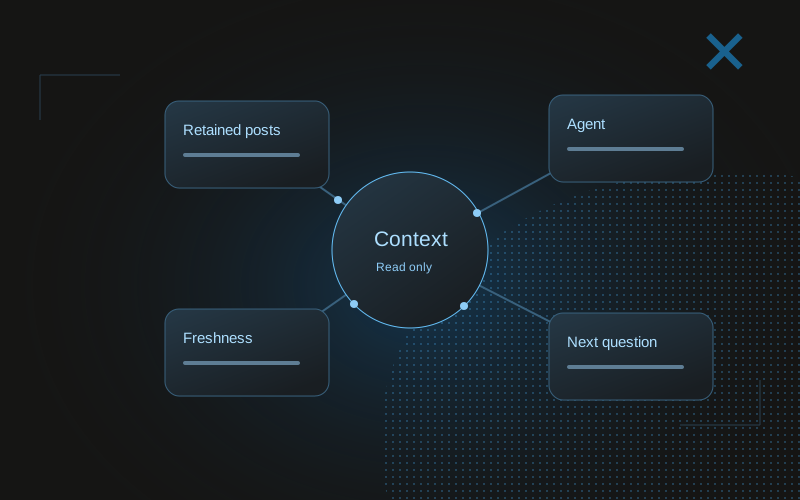
An analytics integration can give an assistant useful context without granting the ability to post. X-tra’s current MCP tools are read-only: they expose collection freshness, account growth, retained posts, folder comparisons, and strategy context. They cannot publish, refresh X, label posts, or modify folders. That boundary is useful when you want evidence-informed drafts.
Publishing requires a separate capability. X documents post creation through its API, including POST /2/tweets. The specific authentication, account access, and integration requirements must match the application you use. A model does not gain publishing ability merely because it can write a well-formed post or read your analytics.
Store credentials in the integration’s appropriate secret storage, not in a prompt, draft, or public work log. Give the publishing component only the operations it needs. An analytics report should remain usable even when publishing access is disconnected.
Source: X API: Create posts
Approve an exact publishing artifact
An approval should identify the account, exact text, media, links, and intended timing. “Looks good” attached to a changing conversation is difficult for software to interpret. Preserve an immutable approved version so the publisher executes the reviewed artifact rather than whichever draft was most recently generated.
If an edit changes the meaning, attached image, destination, or timing in a material way, review the new version. You can make approval lightweight while keeping it precise. For example, a queue item can show the complete post and a button that approves that version for a named account and time.
Use a small state model: draft, ready for review, approved, publishing, published, and failed or uncertain. A published item should store the returned post ID and time. An uncertain item means you do not yet know whether publication happened; it deserves investigation before a retry.
| State | Meaning | Allowed next action |
|---|---|---|
| Draft | Text may still change | Edit or request review |
| Approved | Exact version authorized | Publish that version |
| Publishing | Request underway | Wait for outcome |
| Published | Returned post ID recorded | Measure or inspect |
| Uncertain | Outcome cannot be confirmed | Check before retrying |
Design retries before you automate the schedule
A network timeout can happen after a platform accepted a post. Blindly retrying may publish the same content twice. Keep a durable record of the intended action, the approved content version, and any returned identifier. On an uncertain outcome, inspect the account or integration records before sending another create request.
Use a stable identifier for each approved job in your own system. This is a local deduplication technique, not a claim that a particular X endpoint accepts an idempotency key. Lock the job while publication is underway so two workers cannot both treat it as unpublished. Preserve failure details without exposing tokens.
Make cancellation and pause behavior explicit. A queued job whose approval was withdrawn should not publish because a background worker read an old copy. The publisher should check the current durable state immediately before executing. Test these cases with mocks or a suitable test environment before relying on unattended execution.
Distinguish standalone posting from automated engagement
X’s automation rules permit some automated standalone posts subject to the rest of its policies, prohibit non-API automation such as scripting its website, and prohibit duplicative or spammy content. Automated AI reply bots require prior written and explicit approval from X. Automated replies also have consent and opt-out requirements. Review the current policy before enabling these operations.
Design this workflow around useful original posts and reviewed decisions. Do not bolt on mass replies, automated likes, or unsolicited messages as a supposed distribution shortcut. They are different actions with different requirements, and they do not improve the quality of the material you publish.
Keep policy review in the implementation checklist and revisit it when capabilities change. Adding a reply function to an approved standalone-post workflow changes what the system does. A working API call shows technical capability; it does not establish permission for every use case.
Source: X: Automation rules
Review results without rewarding volume alone
Count publishing reliability separately from content effectiveness. Did the exact approved item publish once, on the correct account, with the correct media and link? That is an operational result. Did the post reach relevant readers or lead to useful visits? That is a content result. A successful scheduler can deliver ineffective posts perfectly.
Label agent-assisted posts by their real topic and intent, then compare them with relevant history. If you want to evaluate the drafting process itself, record which posts received assistance and what kind. Otherwise you will have no defensible way to compare the process later. Avoid claiming that AI caused growth from a before-and-after chart alone.
Bring one decision into the next cycle: a topic worth explaining again, a format worth testing, or a drafting instruction that needs revision. X-tra’s retained analytics can provide evidence for that decision. The assistant prepares the options; your goals determine which one matters.
A prompt to adapt
Use these verified source notes and this analytics summary to draft three distinct standalone X posts. For each, name the intended reader, supporting evidence, and CTA if appropriate. Preserve uncertainty. Do not publish, schedule, or reply. Return drafts for review and identify any claim that still needs verification.Common questions
Can an AI agent publish to X by itself?
Only when it has an appropriate publishing integration and authorization. Writing text and reading analytics do not provide publishing access. Check the current X API and automation requirements.
Does X-tra publish agent-written posts?
No. The current X-tra MCP integration reads cached analytics and editorial context. It does not publish or schedule posts.
What should happen after a publishing timeout?
Mark the outcome uncertain and verify whether the platform accepted the post before retrying. Preserve the approved job and any returned identifier to prevent duplicates.